The Complete Checklist for Cleaning Up and Rebuilding After a House Fire
Experiencing a house fire is one of the most traumatic events a homeowner can endure. In a matter of minutes, a place of safety, warmth, and cherished memories can be transformed into a charred, smoke-filled structure. Once the flames are extinguished and the emergency crews depart, the emotional shock often gives way to overwhelming confusion. Facing standing water, toxic soot, exposed framing, and destroyed personal belongings, many homeowners simply do not know where to begin.
Rebuilding after a fire is not merely about clearing away debris and putting up new drywall; it is a complex, multi-stage restoration process that requires strict sequencing. Attempting to rush ahead to reconstruction before properly mitigating moisture or eliminating deep-seated smoke odors will inevitably lead to long-term structural failure, toxic mold growth, and recurring odor issues. Conversely, taking ordered, methodical steps protects your health, preserves salvageable personal property, and ensures your insurance claims are processed smoothly without unexpected denials.
This comprehensive guide serves as your master roadmap for post-fire recovery. From the critical initial hours of emergency containment and water extraction to deep surface decontamination, HVAC restoration, and final structural reconstruction, this step-by-step checklist will help you navigate the journey of turning a damaged property back into a safe, comfortable home.
Immediate Response & Emergency Site Stabilization (Hours 0–48)
The first two days following a fire are crucial for establishing physical safety, securing the site from weather and trespassers, and stopping secondary property loss. Before taking any action, you must verify that the property is legally and structurally safe to approach.
Securing Property Boundaries and Conducting Structural Risk Assessments
Never re-enter a fire-damaged structure until the local fire department or municipal building inspector has officially declared the property safe for entry. Fire and extreme heat severely compromise load-bearing walls, floor joists, and roof trusses, creating hidden risks of structural collapse.
- Obtain Official Clearance: Wait for the incident commander or city code official to issue an entry clearance. Wear protective equipment—including heavy-duty steel-toe boots, thick work gloves, and an N95 or P100 respirator mask—to protect against falling debris and toxic particulate ash.
- Prevent Weather and Vandalism Damage: Immediately board up broken windows, seal breached exterior doors with exterior-grade plywood, and secure high-visibility perimeter fencing around the property perimeter to prevent theft and unauthorized entry.
- Protect Damaged Roof Lines: Install heavy-duty, UV-resistant tarps over burned-out roof sections or skylights to prevent rain from causing further damage to surviving interior spaces.
- Engage Emergency Mitigation Teams: Partnering with certified emergency restoration teams providing specialized fire damage services ensures that temporary shoring posts, structural braces, and perimeter containment barriers are installed correctly according to OSHA safety standards.
Managing Debris Extraction and Clearing Unsalvageable Materials
Before any heavy cleaning or reconstruction can begin, the site must be systematically cleared of unsalvageable debris, fallen plaster, and heavily charred building components.
- Exhaustive Photo and Video Documentation: Walk through every room with a camera or smartphone before touching or throwing away a single item. Document structural damage, destroyed furniture, personal effects, and appliances from multiple angles to support your insurance claim contents inventory.
- Establish a Staging and Sorting Zone: Create distinct areas on the driveway or lawn for items classified as total losses, items requiring professional restoration, and hazardous materials needing special disposal.
- Safe Removal of Charred Materials: Strip out water-soaked, charred drywall, scorched insulation, ruined carpeting, and collapsed ceiling tiles down to the solid structural framing.
- Contracting Heavy Waste Haulers: Hiring an experienced junk hauler allows you to dispose of tons of heavy masonry, burned timber, ruined furniture, and contaminated building debris quickly and safely without cluttering municipal roadways.
Water Mitigation, Plumbing Audits, and Decontamination
A major aspect of fire damage that often catches homeowners by surprise is the catastrophic water damage left behind by firefighting efforts. Thousands of gallons of high-pressure water are sprayed onto roofs and through ceilings, soaking framing, flooding basements, and creating an immediate risk of widespread mold growth within 24 to 48 hours.
Extracting Firefighter Water and Repairing Compromised Piping
Drying out the structure must happen simultaneously with fire cleanup. Standing water and trapped moisture degrade structural lumber and create ideal conditions for mold spores to multiply rapidly.
- Rapid Industrial Water Extraction: Deploy commercial-grade submersible pumps, wet-vacuum units, and heavy-duty water extractors to remove standing water from basements, crawlspaces, and ground-floor rooms.
- Structural Moisture Dehumidification: Set up high-capacity LGR (Low Grain Refrigerant) dehumidifiers and industrial air movers throughout exposed framing to pull moisture out of structural studs, subfloors, and concrete foundations.
- Pressure-Testing Internal Supply Lines: Extreme heat from a house fire can melt plastic PEX piping, crack copper joints, and compromise soldered fittings behind walls.
- Executing Emergency Water Line Repairs: Scheduling professional plumbing repairs ensures that supply lines, main shut-off valves, and drain lines are pressure-tested and fully repaired before municipal water service is restored to the home.
Restoring Filtration Systems and On-Site Drainage Infrastructure
In rural or suburban properties, fire damage often extends to private utility infrastructure, well heads, and outdoor drainage channels. Restoring clean water access is essential for on-site sanitation during recovery.
- Auditing Private Well and Filtration Assemblies: Heat, falling ash, and firefighting chemicals can ruin outdoor pump houses, well heads, and filtration media.
- Sanitizing Water Supply Equipment: Inspecting and servicing private water systems, well pressure tanks, and any installed water treatment system ensures that heavy metals, soot, and chemical fire retardants do not contaminate your household drinking water.
- Inspecting Stormwater Runoff Channels: Firefighting efforts generate massive volumes of surface runoff containing ash, mud, and debris that clog outdoor drainage pathways, swales, and culverts.
- Clearing Retaining Wall Drainage Outlets: Performing necessary weir repair on drainage structures, retaining wall overflow channels, and landscape basins prevents future rainwater from backing up against your home’s foundation during storm events.
Deep Soot Removal, HVAC Restoration, and Surface Decontamination
Soot is an insidious byproduct of combustion composed of microscopic carbon particles, oils, resins, and toxic chemicals released by burning plastics, synthetic fabrics, and building materials. Soot acidic residue eats into glass, metal, and glazed surfaces if left untreated, causing permanent etching and staining within days.
Eliminating Odors and Purifying Air Distribution Systems
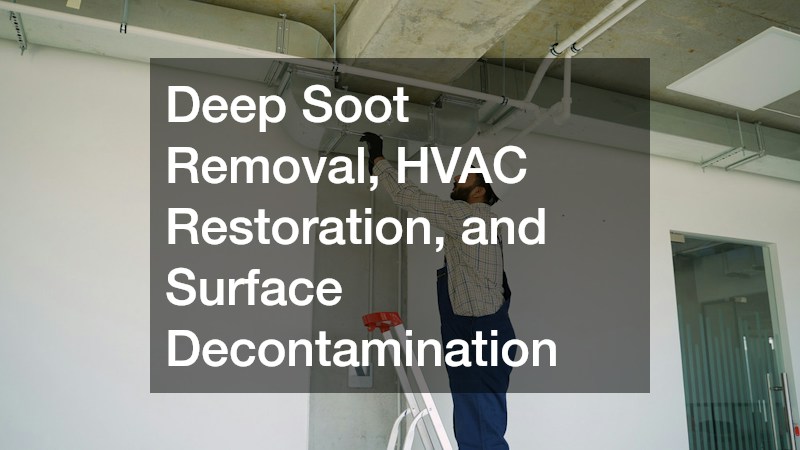
Smoke and soot travel through every open space, settling deep inside wall cavities, ceiling voids, and central heating and air conditioning ductwork. Turning on an untested HVAC system can blow toxic soot throughout unaffected areas of the home.
- Inspecting Heating and Cooling Equipment: Never operate your furnace, heat pump, or air conditioning unit after a fire until it has been inspected by a certified technician. Heat and smoke damage cause electrical short circuits, melt internal wiring, and ruin sensitive control boards.
- Servicing Mechanical Climate Systems: Scheduling complete ac maintenance allows technicians to clean condenser coils, replace heat exchangers, test electrical safety relays, and ensure the unit operates safely.
- Cleaning Contaminated Air Distribution Ducts: Smoke residue coats the inside of supply and return ductwork, creating an ongoing source of severe smoke odor whenever air circulates.
- Contracting Specialized Duct Cleaning Teams: Hiring certified professionals to perform comprehensive air duct cleaning removes accumulated soot, toxic ash, and chemical residues from duct walls using negative-pressure vacuum systems and rotary brushes.
Treating Fabrics, Carpets, and Interior Hard Surfaces
Different types of soot require distinct cleaning methods. Dry soot from fast-burning wood fires requires different treatment than wet, oily soot from smoldering plastic or grease fires.
- Dry-Soot HEPA Vacuuming: Use specialized HEPA-filtered vacuum equipment holding the nozzle slightly above surfaces to lift dry soot without pushing carbon particles deeper into drywall, plaster, or unpainted wood grain.
- Dry Chemical Sponge Treatments: Wipe unpainted walls, ceilings, and wood paneling with vulcanized rubber chemical sponges. These sponges absorb soot particles without water, preventing oily smearing.
- Deep Surface Washing and Deodorization: Enlisting certified local cleaners for deep-cleaning tasks ensures that hard surfaces, countertops, window frames, and ceramic tiles are washed with specialized degreasers and counter-actant solutions to remove stubborn smoke films.
- Deep Fabric Extraction for Carpets: Rugs and carpets retain fine soot particles and deep smoke odors. Utilizing commercial steam carpet cleaning units uses high-temperature water and specialized neutralizers to lift embedded soot from carpet fibers and subfloor padding.
Structural Reconstruction, Content Pack-Out, and Final Move-In
Once the home is fully dried, decontaminated, and deodorized, the transition from cleaning to physical reconstruction begins. This phase focuses on rebuilding framing, installing new utility lines, and restoring your home to a move-in ready condition.
Inventorying, Inventory Packing, and Relocating Salvageable Belongings
Restoring personal property often happens off-site while heavy construction machinery, drywall crews, and painters occupy the home.
- Comprehensive Content Pack-Out: Carefully catalog every personal item, clothing piece, heirloom, and electronic device slated for off-site cleaning, deodorization, and secure storage.
- Specialized Content Restoration: Send soft goods to specialized textile dry cleaners who use ozone chambers and hydraulic washing to remove smoke odors from clothes, drapes, and bedding.
- Hiring Professional Transportation Teams: Partnering with insured moving companies guarantees that your cleaned, restored personal belongings are carefully packed, transported, and stored in climate-controlled facilities until structural repairs are complete.
Rebuilding Walls, Electrical Grid, and Passing Final Clearance Inspections
Rebuilding after a fire provides a unique opportunity to update structural elements, improve energy efficiency, and bring older home construction up to current building codes.
- Rough-In Electrical and Plumbing Inspections: Install new electrical wiring, circuit panels, GFCI outlets, and plumbing lines throughout exposed wall cavities. Schedule mandatory municipal rough-in inspections before closing up walls.
- Insulation and Drywall Installation: Install high-efficiency insulation along exterior walls and hang moisture-resistant, fire-rated drywall throughout living areas, taping, mudding, and sanding joints to a smooth finish.
- Interior Finishing and Cabinetry: Install new interior doors, baseboards, floor coverings, kitchen cabinets, and bathroom vanities, applying low-VOC paints and sealants to seal in fresh interior surfaces.
- Final Air Quality and Occupancy Clearance: Before moving back into the home, conduct professional indoor air quality testing to verify that airborne soot particulate levels, volatile organic compounds (VOCs), and smoke odors are completely gone. Once local building officials issue a final Certificate of Occupancy, you can safely move back home.
Master Fire Recovery Timeline & Checklist Matrix
To help keep your recovery project organized, use this phase-by-phase reference table to track key objectives, actions, and vendor partnerships throughout the restoration process.
Phase-by-Phase Restoration Progress Matrix
- Phase 1: Emergency Response (Days 1–3)
- Core Objective: Site containment, safety verification, and legal protection.
- Key Action Items: Obtain entry clearance, install window/door board-ups, tarp damaged roof sections, and capture exhaustive photo documentation for insurance.
- Primary Trades / Partners: Municipal Inspectors, Insurance Adjusters, Emergency Fire Mitigation Crews, Security Personnel.
- Phase 2: Water & Debris Removal (Days 3–7)
- Core Objective: Secondary loss prevention and site clearance.
- Key Action Items: Extract standing water, deploy industrial dehumidifiers, clear charred debris, and repair compromised main water supply lines.
- Primary Trades / Partners: Water Mitigation Specialists, Plumbing Crews, Waste Removal Teams.
- Phase 3: Decontamination & Odor Elimination (Weeks 2–4)
- Core Objective: Deep cleaning, soot removal, and environmental health restoration.
- Key Action Items: Vacuum soot with HEPA equipment, wash interior surfaces, perform HVAC duct cleaning, execute carpet steam extraction, and set up thermal fogging chambers.
- Primary Trades / Partners: Certified Surface Cleaners, Duct Cleaning Specialists, Carpet Cleaning Technicians, HVAC Technicians.
- Phase 4: Structural Reconstruction (Months 2–6+)
- Core Objective: Rebuilding structural envelope to local building codes.
- Key Action Items: Repair damaged framing, complete electrical and plumbing rough-ins, hang drywall, install flooring/cabinets, and complete interior painting.
- Primary Trades / Partners: General Contractors, Electricians, Plumbers, Drywall Installers, Finish Carpenters.
- Phase 5: Move-In & Final Clearance (Final Month)
- Core Objective: Safe occupancy return and content pack-back.
- Key Action Items: Perform final air quality testing, obtain official Certificate of Occupancy, transport restored belongings back home, and finalize insurance claims.
- Primary Trades / Partners: Environmental Air Testing Labs, Professional Moving Services, Municipal Building Department.
Rebuilding a home after a fire is a challenging journey that tests a homeowner’s patience, resilience, and emotional strength. However, by taking a structured, step-by-step approach, you can navigate the recovery process safely, protect your financial interests, and avoid the costly mistakes caused by rushing into reconstruction prematurely.
Remember that successful fire restoration relies on proper sequencing: securing the site, extracting water, decontaminating soot, eliminating smoke odors, and finally rebuilding framing and interior surfaces. By partnering with certified, licensed trade professionals across every stage of recovery, you can rebuild with complete confidence—turning a chaotic disaster into a safe, beautiful, and healthier home for you and your family for years to come.